
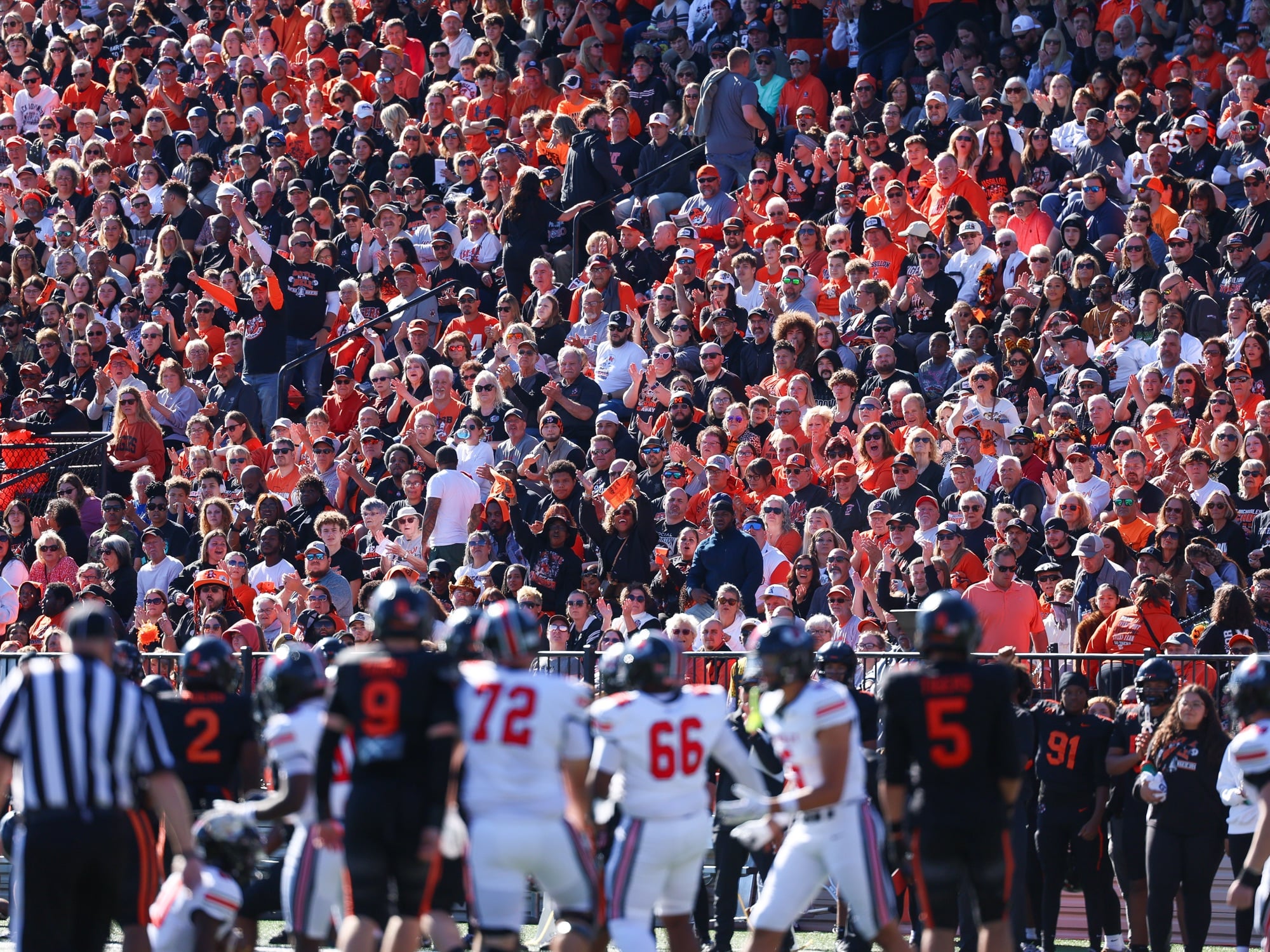
The Ohio Attorney General’s Office is pushing back against the Ohio High School Athletic Association’s attempt to overturn a court order allowing two Massillon Washington High School football players to finish the 2026 season.
In a 17-page filing submitted Monday, Oct. 26, attorneys representing the judges of Ohio’s Fifth District Court of Appeals asked the Ohio Supreme Court to dismiss OHSAA’s legal challenge and deny its emergency request to suspend an injunction allowing brothers Brayton and Brydon Feister to play.
The response comes three days after OHSAA filed an emergency motion and complaint for a writ of prohibition, arguing that the Fifth District lacked jurisdiction to issue its Oct. 16 injunction.
The Attorney General’s Office disputes that argument, maintaining that the appellate court had the legal authority to consider the brothers’ appeal.
In an opening argument that uses football terminology, attorneys characterized OHSAA’s latest legal maneuver as a last-minute attempt to reverse an unfavorable decision.
“After losing at the lower court, Relator the Ohio High School Athletic Association attempts a Hail Mary to overturn the Fifth District’s injunction pending appeal,” the filing states.
The attorneys continued, “In other terms, Relator called the wrong play and now faces dismissal of its action.”
The filing was submitted by Assistant Attorney General Julie M. Pfeiffer, along with attorneys Ann Yackshaw, Michael A. Walton, Tyler W. Blair and Bryan B. Lee, on behalf of the Fifth District Court of Appeals judges.
Attorneys argue OHSAA waited too long
One of the central arguments in the response is that OHSAA waited an unreasonable amount of time before seeking emergency intervention from the Supreme Court.
The Fifth District issued its injunction Oct. 16, allowing the Feister brothers to participate in Massillon’s remaining varsity football games.
OHSAA did not file its Supreme Court challenge until Oct. 23, seven days later.
The Attorney General’s Office argues that the delay was especially significant because OHSAA requested immediate action ahead of Massillon’s rivalry game against Canton McKinley and the approaching postseason.
Attorneys contend that the delay limited the appellate judges’ ability to prepare a defense and interfered with the court’s handling of the underlying appeal.
The filing invokes the legal doctrine of laches, which can prevent a party from obtaining relief when an unreasonable delay causes prejudice to another party.
According to the response, OHSAA knew about the appellate ruling when it was issued but offered no explanation for waiting until Oct. 23 to seek emergency relief.
The attorneys argue that the Supreme Court should reject OHSAA’s request on those grounds.
Dispute over appellate court’s authority
The filing also directly challenges OHSAA’s claim that the Fifth District lacked jurisdiction to issue the injunction.
OHSAA has argued that the Oct. 9 Stark County Common Pleas Court ruling denying the brothers’ request for a preliminary injunction was not a final, appealable order because the underlying lawsuit remains unresolved.
Attorneys for the appellate judges disagree.
They argue that the denial of preliminary relief can qualify as an appealable order under Ohio law when waiting until the conclusion of a case would leave the appealing party without a meaningful or effective remedy.
The response maintains that the Fifth District had authority to determine whether the lower court’s decision was appealable.
Attorneys also argue that OHSAA has other legal options available, including challenging the appellate court’s jurisdiction during the ongoing appeal and seeking review from the Supreme Court after a final appellate decision.
Because those avenues remain available, the filing contends that OHSAA is not entitled to the extraordinary remedy of a writ of prohibition.
The Attorney General’s Office further argues that OHSAA’s complaint contains a procedural defect because it does not identify the individual appellate judges as respondents.
Instead, the lawsuit names the judges of the Fifth District Court of Appeals collectively.
The response cites Ohio case law supporting its position that individual judges must be properly identified in such actions.
Legal battle continues ahead of playoffs
The dispute began Sept. 25, when six Massillon Washington football players and their families filed a lawsuit challenging OHSAA’s enforcement of transfer eligibility restrictions.
Among those players were Brayton and Brydon Feister, who transferred to Massillon after previously attending Archbishop Hoban High School in Akron.
OHSAA denied the brothers’ transfer exception requests Sept. 28, concluding that their family’s relocation did not satisfy the association’s requirements for an exception.
Attorneys representing the family have challenged that determination.
On Oct. 9, visiting Judge Andrew Logan denied the brothers’ request for a preliminary injunction in Stark County Common Pleas Court and dissolved an earlier temporary restraining order.
The brothers appealed, and on Oct. 16, the Fifth District Court of Appeals granted an emergency preliminary injunction preventing OHSAA from blocking their participation in Massillon varsity football games for the remainder of the season.
Canton-based law firm Plakas Mannos represents the brothers in the underlying legal proceedings. Attorneys Lee Plakas, W. Scott Gwin and David Dingwell are also identified in the latest Supreme Court filing as counsel for proposed intervenors-respondents.
OHSAA subsequently asked the Supreme Court to suspend the appellate injunction, arguing that the brothers’ participation could affect playoff qualification, seeding and other schools competing in the postseason.
The association also raised the possibility of forfeitures if the injunction is eventually overturned.
Those potential penalties have not been imposed as a result of the Supreme Court filings.
Ohio’s high school football playoffs are scheduled to begin Friday, Oct. 30.
What happens next?
The Attorney General’s Office is asking the Supreme Court to deny OHSAA’s emergency motion and dismiss its complaint for a writ of prohibition.
The filing is a legal response, not a ruling by the Supreme Court.
The Oct. 16 appellate injunction remains the relevant order allowing the Feister brothers to participate unless it is stayed, modified or dissolved by a court.
The Supreme Court’s eventual decision on OHSAA’s emergency request could determine whether that protection continues during Massillon’s postseason run.